Choosing Between Wet and Electric Underfloor Heating
For those chilly winter mornings, stepping out of bed only to be greeted by icy floors can be a shock to the system. Not the most pleasant start to the day. This is where underfloor heating comes to the rescue, providing a comforting and convenient solution to cold floors. It ensures you start your day on a warm note, making your home a cosy and inviting space where you can relax and unwind.
But which is the best option for your residence, office or other working space – wet or electric underfloor heating? This is here to explain underfloor heating systems, their types, and which one will best suit you.
Let’s understand one thing that underfloor heating is an alternative to radiators. We all know that radiators help heat the rooms by heating the air around them, but the underfloor heating system sits beneath your floor and radiates heat upward into the room. There are two main types of heating systems:
- Wet – Hydronic systems involve warm water flowing through the pipes.
- Electric – It uses electric cables or mats to generate heat underneath the floor.
Although both systems are different, their functions are equally efficient in keeping floors nice and warm during winter, providing a reliable and effective solution to cold floors.
Let’s dig deeper and see which system is perfect for which setting.
What is Wet Underfloor Heating?
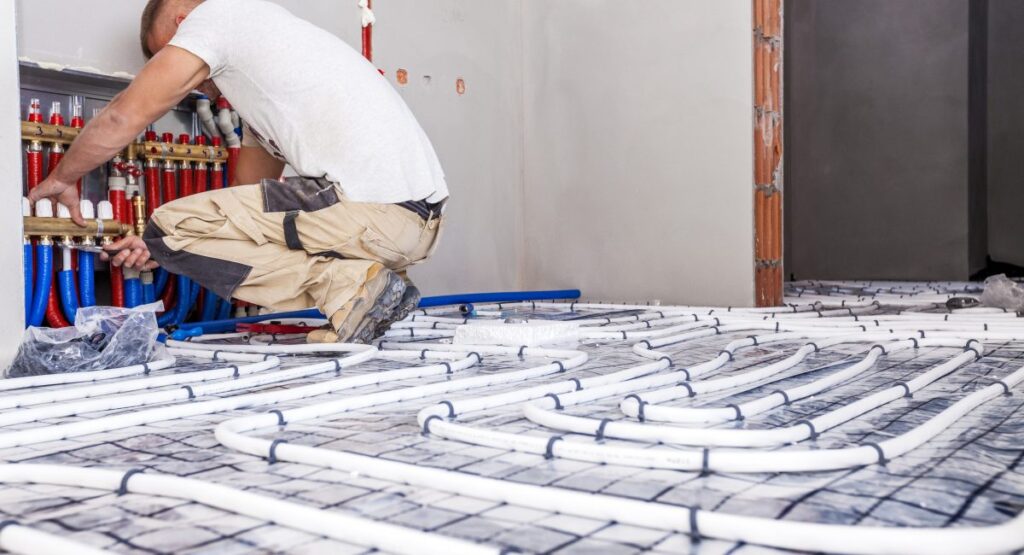
As we explained earlier, hydronic or warm water underfloor heating systems have polyethene pipes under the floor, forming a roadmap or network that circulates warm water at around 40-45 degrees Celsius. The water heating system is generally very hot, but there is a mixer system that can help regulate the temperature. Since it is a huge pipework underfloor, the system requires a pump to ensure smooth water flow throughout; that’s manifold, a device that acts as a central hub, distributing the warm water to different parts of the floor. The manifold is connected to the central boiler or the heater system, which will help get warm water around. Service providers like Silver Maintenance are the perfect partners for you to suggest the best option for your space.
Benefits of Wet Underfloor Heating
Wet underfloor heating systems offer long-term value despite their high upfront cost. You can expect to use the system you install for 20 or more years, providing a secure and confident investment in your home’s comfort. This ensures you get the most out of your investment and a reliable heating solution for years to come.
Wet underfloor heating systems guarantee that your entire house is heated evenly, providing a comfortable and cosy home environment. This even heating gives you the peace of mind that every corner of your home is warm, creating a secure and reassuring atmosphere where you can feel comfortable and at ease.
Home value—Since the system is hidden away and gives promising results, it is a hidden home heating system and each room has its own thermostat controller.
Challenges of the Wet Heating System
Repairs can be tricky // The pipes are susceptible to leakage and damage, making them challenging to repair. Therefore, check about possible damages, how to maintain them, and how frequently one needs to check for damages and organise repair work.
Finances // This is one of the key considerations when planning the underfloor heating systems, as they would cost around £150 pm2 (over double the price of their electric counterparts); therefore, look at the coverage area and how much it will impact your finances.
Floor Depth // When planning the warm water underfloor heating system, it’s a good idea to get a professional to inspect the floor depth, as a vast network of pipes will be running under it, taking up the floor depth.
Installation // Finally, you have decided to go with the warm water underfloor systems; great, it is an excellent decision but be prepared for the time it will take to complete the messy task, which will take days.
What is Electric Underfloor Heating?

On the other hand, electric underfloor heating is a more straightforward system. It involves a heating wire network placed on a mesh and then sealed on the concrete floor, which helps insulate the heat upwards. This style of heating is ideal for one-room floor heating purposes. Let’s explore the benefits of this system to provide a balanced view and help you make an informed decision. It is connected to the main power, and when switched on, the heat generated travels through the wires under the floor, which then results in heating the floor.
Pros of Electric Underfloor Heating Systems
Ideal for smaller spaces // As mentioned above, the heating unit is efficient for smaller spaces like rooms or studio apartments.
Maintenance-free // It’s not entirely free, but less maintenance is required compared to warm water heating systems. The chances of damage or part savings are scarce.
Quick Installations // As you can see, it is a network of wires attached to the smart thermostat, and ideally, it is for a smaller space; therefore, the installation will be completed quickly compared to the wet heating system.
Lower upfront costs // Electric systems are cheaper to install, as the per square meter costs are around £65 pm2.
Smart thermostat // Electric systems are connected with smart thermostats, which allow users to select timings, temperature controls, and auto settings comfortably.
Challenges of Electric Underfloor Heating Systems
Not ideal for larger spaces // As mentioned above, electric systems are suitable for one-room apartments or smaller spaces. The efficiency of the system in larger areas is not as good.
Electrical upgrades // To ensure the smooth function of the system, the heating circuit would require a proper electrical circuit; therefore, it is advisable to hire a professional to advise you about all the proper installation methods.
Higher usage costs // As the system runs on electricity, the usage cost will be higher than that of the heat pump or gas energy used in other systems. (You can expect this to equate to 1.5-2.5p pm2 per hour to give you an idea depending on W/m2 and calculated based on 150-250W/m2 system.)
Lifespan // Compared to wet systems, electric systems have a shorter lifespan and come with a 10-15-year warranty.
Which heating solution is best for me?
Winters are approaching, and now that you have decided that you need to get your heating systems checked or refurbished, so this is the perfect time to plan your work and finances. But here are the points to ponder when deciding what type of heating system will work on your property-
1) Look at the space size. If it is a larger space, consider wet heating, but if we are looking at something like a room or smaller property, consider an electrical heating system.
2) Considering long-term value, wet heating is the perfect solution, as it renews energy usage, whereas electrical comes with a warranty of 10-15 years.
3) Expenses are the key consideration; wet heating systems will be expensive, installation costs will be higher, and even the repair work can put a sizeable dent in your pocket, but the electrical heating will be cheaper.
4) Look at the usage; if you are looking for occasional usage, electrical heating is the best solution, but wet heating is preferred if you consider regular usage.
Now, let’s discuss the flooring that will work best with the heating system.
What flooring will suit best with either of the systems?
When you are planning for the heating solutions, here are the flooring you can consider getting maximum results:
- Tile & Stone // It has given good results with both heating systems.
- Laminate and Vinyl // These flooring options are suitable for both, but you’ll need an underlay that is compatible with underfloor heating.
- Carpet // This is one of the standard flooring options people consider in the winter, but a thick rug reduces the heater’s efficiency.
- Wood // Wood is good at insulation and is considered one of the best materials for retaining heat but consider thinner engineered wood over solid hardwood.
It is recommended to always check the flooring product’s compatibility before installation, and a professional like Silver Maintenance can also guide you to the best perfection.
Are there any other factors to consider?
Home Design // The efficiency of the system depends heavily on the type of house you are looking at; if it is modern and sleek, underfloor heating is ideal, but if we are looking at a vintage property with lots of rooms and poor insulation, then you have to consider options carefully.
Heating times // It is important to know which heating system will work faster and how long it will take to heat the space.
Insulation is critical // You are heating the floor and room, so the heat should move upwards, not downwards. If the heat escapes downwards, then it is of no use.
Environmental impact // If you are worried about your carbon footprint, consider a wet heating system.
Closing Thoughts
Getting an underfloor heating system is not just as easy as purchasing a heater you can plug in or a radiator that you can surface mount and plumb into a space. It is about making a significant commitment to renovating the space, considering the house layout and what heating solution will work effectively, considering finances, repairs, and later running costs. Consider other important factors like how long each system will give a warranty and how many times you can heat the space. It is one of the major decisions when residing or working in the colder countries. After you look at the space size, how much it will cost, and how evenly it will heat the space, you can decide whether you want wet or electric heating and what challenges it will come with.
Underfloor heating is a game changer; gone are those days when we used to have those chunky radiators or heaters in the home. They are hidden away and make an excellent value for the property. So, if you are looking for a professional who can help you evaluate and guide you on what underfloor heating solution will best fit you and then install the same for you, Silver Maintenance is your best partner.